
How to Publish and Schedule Content on Digital Displays – Step-by-Step Guide
Introduction
In the modern fast world, digital displays are an effective means of communication among businesses, schools, retail stores, and street corners. However, just having a display is not enough, the real magic is in publishing the appropriate contents at the appropriate time. Regardless of whether you have promotional ads, updates in real time, or internal communications, the most important thing with digital signage is having a clear plan on how to publish and schedule the information.
This guide step-by-step instruction will help you to know all details about publishing and posting the content on the online displays.
Step 1: Select the Proper Content Management System (CMS).
The first one is choosing a CMS (Content Management System) to use on your digital displays. This is software giving you the option to post, arrange and plan the content.
Popular options include:
- Cloud-based CMS: Manage screens remotely from anywhere.
- Local CMS: On-site offline management.
Pro Tip: When you have more than one screen on different locations, a cloud-based CMS is a good choice.
Step 2: Prepare the Content
When you have a read CMS, you can start making content that aligns with your objects.
Samples of content you are suitable to publish:
- Promotional Advertisements: Abatements, offers, and product highlights.
- Educational Content: News, updates, or schedules.
- Interactive Media: QR canons, checks, or touch- screen features.
- Real- time Data: Weather, social media feeds, or live scores.
Design Hint: Use short dispatches, plates and sources that are easy to read at a distance.
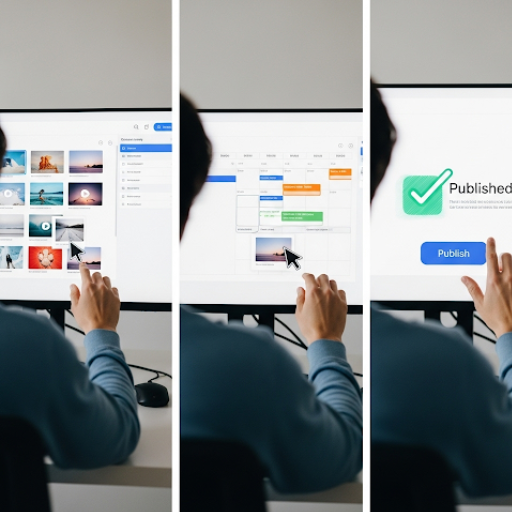
Step 3: Upload Content to the CMS
Log in to your CMS dashboard and upload images, videos, or HTML files. Most CMS platforms support:
- JPG, PNG (images)
- MP4 (videos)
- HTML5 (interactive content)
Sort materials into folders or playlists.
Step 4: Schedule Your Content
This is where digital signage is the best--you can plan on what, at what time, and where to play.
Scheduling options:
- Time-based: Advertise at certain times of the day (e.g., morning offers, evening deals).
- Day-based: Publish special weekend or holiday content.
- Event-based: Content that is triggered when an event occurs such as a product launch or a promotion.
Smart Scheduling: Shuffle the content types to prevent monotony and keep the viewer involved.
Step 5: Proofreading Before Publication.
Test your playlist every time you push it live. Check for:
- Formatting issues
- Spelling errors
- Video/audio compatibility
- Proper timing and transitions
The testing makes the viewer have a smooth viewing experience.
Step 6: Publicize Content to Displays.
When you are ready, hit Publish. you will see, in seconds, the scheduled content on your screens (local or remote).
Updates on cloud-based systems are instantaneous--even when there are more than two locations.
Step 7: Monitor and Update Regularly
It is not a one-time job to publish content. Keep track of your displays and refresh the content regularly to make it new and exciting.
Best practices:
- Refresh campaigns weekly or monthly.
- Monitor performance (analytics found in most CMS systems).
- Immediately replace obsolete offers.
Benefits of Scheduling Content on Digital Displays
- Consistency: Delivery of messages in real time without human intervention.
- Flexibility: Update multiple displays remotely in seconds.
- Engagement: The viewers receive timely content at the most appropriate time.
- Saving time: Automates time consuming publishing operations.
Final Thoughts
It is no longer a complex task to publish and schedule the content on the digital displays. Businesses can utilize the full strength of digital signage with the correct CMS, ready-to-go content and intelligent scheduling. The trick here is to ensure that the content remains interesting, timely and up to date.
When done well, the digital displays will not just attract attention but also propel action- real action, such as increased sales in shops as well as better communication in offices.